The Invisible Shield: Why High Purity Alumina is a Strategic Defense Asset
Boris Hardi
Author
Modern warfare is increasingly defined by optics, sensors, and high-speed electronics. High Purity Alumina (HPA) is the critical material at the intersection of high technology and national security.
When we think of defense materials, the mind usually jumps to titanium alloys, hardened steel, or advanced carbon fiber composites. We think of strength in terms of brute metal.
However, modern warfare is increasingly defined not just by kinetic armor, but by optics, sensors, and high-speed electronics. In this arena, traditional metals fall short.
There is a critical, often overlooked material sitting at the intersection of high technology and national security: High Purity Alumina (HPA).
At Zero Waste Metals, we focus on materials where extreme refinement adds exponential value. HPA is the perfect example. We aren't talking about the standard alumina used in refractories or aluminum metal production. We are talking about 4N+ purity (99.99% pure or higher)—a chemically near-perfect material that serves as the feedstock for synthetic sapphire and advanced technical ceramics.
In the defense sector, HPA is no longer an optional upgrade; it is an essential requirement for next-generation capabilities.
1. Lighter, Stronger, Clearer Armor
The traditional approach to transparent armor—bulletproof windows for Humvees, MRAPs, or aircraft—has been thick layers of laminated glass and polycarbonate. It works, but it carries a massive weight penalty that strains engines, reduces vehicle mobility, and distorts visibility.
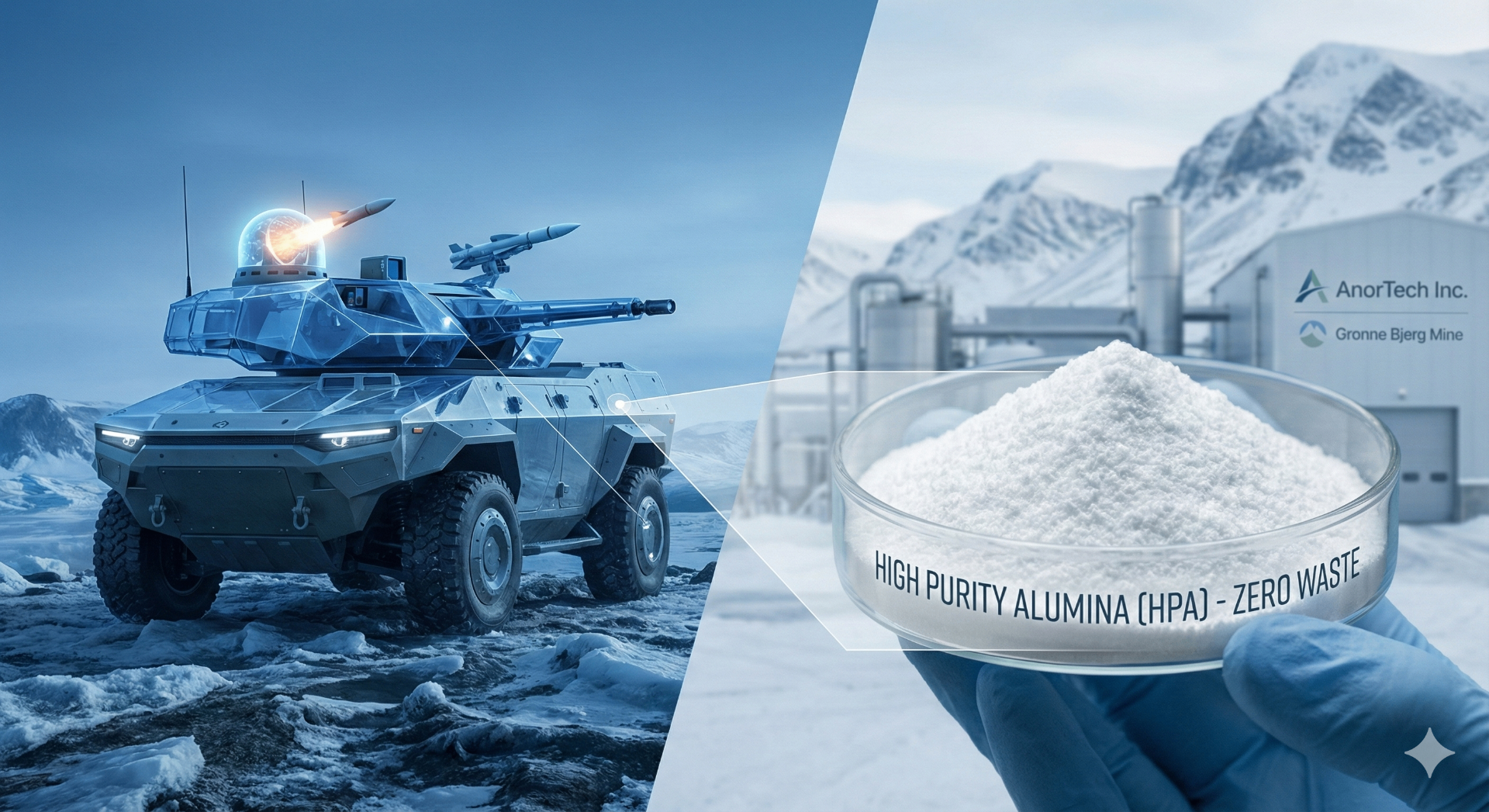
HPA has changed the game. It is the raw material used to grow large crystals of synthetic sapphire or manufacture transparent ceramics like ALON® (aluminum oxynitride).
The resulting material is incredible. Sapphire is the hardest natural substance after diamond (9 on the Mohs scale). When used as the strike face in transparent armor, it doesn't just stop a bullet; its extreme hardness shatters the ceramic core of armor-piercing rounds upon impact.
The strategic advantage? Sapphire-based armor can provide the same ballistic protection as traditional glass laminate at roughly half the weight and half the thickness.
2. The "Eyes" of Hypersonic Missiles
Modern defense relies heavily on heat-seeking missiles and advanced tracking systems. These systems use infrared (IR) sensors located in the nose of the projectile to find their targets.
The challenge is speed. As a missile approaches supersonic or hypersonic speeds (Mach 4 and beyond), atmospheric friction generates immense heat, easily exceeding 1,000°C at the tip. Standard glass would melt or shatter from thermal shock. More importantly, standard materials become opaque to infrared light at high temperatures, effectively blinding the missile's guidance system.
HPA-derived sapphire domes are currently the only viable solution. They remain incredibly durable under extreme aerodynamic pressure, withstand intense thermal shock, and crucially, remain transparent to infrared wavelengths even when red-hot.
3. Protecting the Power Source
The modern battlefield is electrifying. From silent-watch capabilities in tanks to the myriad of electronic devices carried by dismounted soldiers, high-density lithium-ion batteries are everywhere.
Battery safety in combat zones is paramount. A punctured battery can lead to thermal runaway—intense, uncontrollable fires.
HPA is now widely used to create ceramic coating layers on the separators inside high-performance lithium-ion batteries. This ceramic layer provides exceptional thermal stability, preventing internal short circuits that lead to catastrophic fires if the battery is damaged in the field.
The Supply Chain Solution: AnorTech Inc.
For defense applications, the security of the supply chain is just as critical as the material itself. Relying on refining capacity in geopolitically sensitive regions is a risk the industry can no longer afford.
This is where companies like AnorTech Inc. are reshaping the landscape.
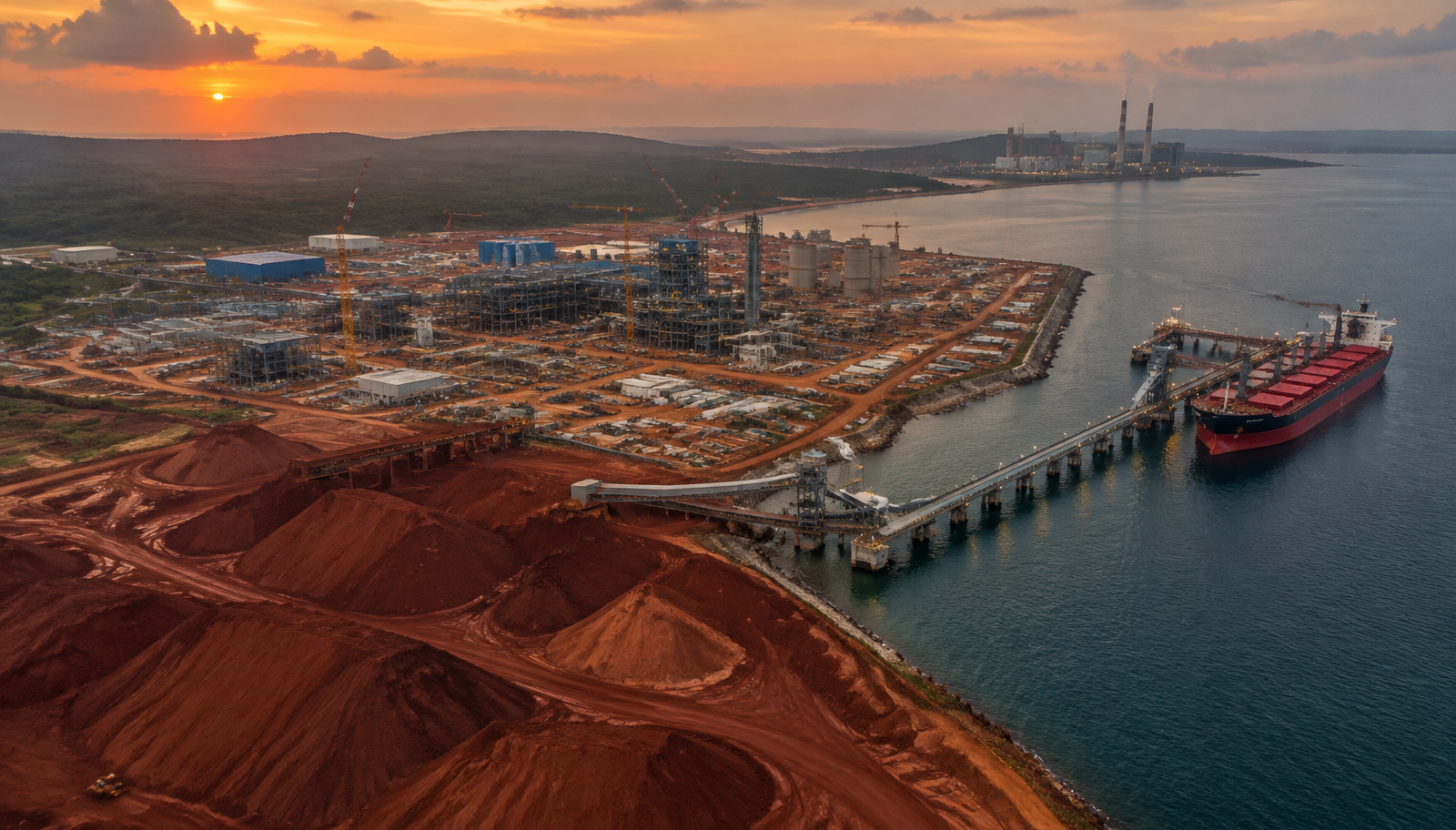
AnorTech is pioneering the production of Zero Waste High Purity Alumina from their Grønne Bjerg mine in Greenland. Unlike traditional alumina production, which often relies on bauxite and generates toxic red mud tailings, AnorTech utilizes a unique anorthosite mineral feedstock.
Their process is a game-changer for two reasons:
Zero Waste It is a closed-loop approach where every part of the ore is utilized. The by-products (silica and calcium silicate) are commercially valuable for green cement and other industrial uses, rather than becoming environmental liabilities.
Strategic Security By sourcing from Greenland, AnorTech provides a stable, **Western-aligned source** of high-purity feedstock, ensuring that the defense industry's access to this critical material remains secure and sustainable.
A High-Value, Zero-Waste Future
At Zero Waste Metals, we recognize that the value of a material isn't just in its bulk tonnage, but in its refinement and its origin.
AnorTech's operations at Grønne Bjerg represent the future of critical minerals—where environmental stewardship and strategic defense capability go hand in hand.
The invisible shield protecting our most advanced defense systems starts with the purest materials, sourced responsibly.